Comparing CNC Mills and Swiss Lathes for Optimal Machining Solutions
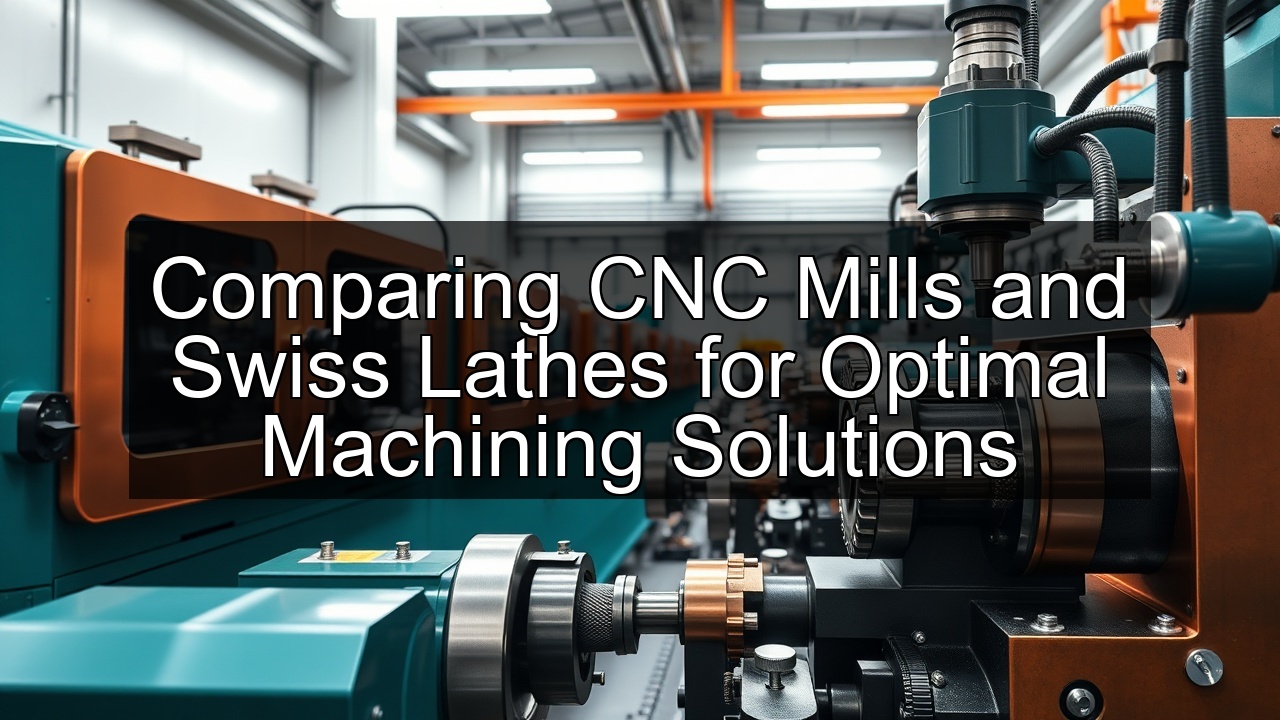
Understanding CNC Mills and Swiss Lathes
Overview of CNC Mills
CNC mills revolutionize metalworking by shaping materials with precision and speed. These milling machines use computer numerical control to direct cutting tools across multiple axes, carving out complex geometries from stock like carbide blocks or aluminum billets. Machinists program the CNC mill to rotate a spindle that holds tools such as end mills or drill bits, which remove material layer by layer. In modern manufacturing, CNC mills excel at producing flat surfaces, slots, and intricate contours on larger parts. They often secure workpieces in a vise or chuck on the table, allowing for versatile operations including threading and drilling. Unlike manual milling, CNC technology ensures repeatability, reducing errors in high-volume production. Industries rely on these machines for prototyping and custom components, where accuracy down to thousandths of an inch matters. The integration of coolant systems prevents overheating during extended runs, preserving tool life and surface finish. Overall, CNC mills form the backbone of subtractive manufacturing, offering flexibility that manual methods can't match.
Introduction to Swiss Lathes
Swiss lathes, also known as swiss style lathes or automatic lathe variants, specialize in turning slender, high-precision parts from bar stock. Originating from Swiss watchmaking traditions, these machines slide the cutting tool along the Z-axis while the workpiece rotates in a collet or chuck, minimizing deflection for tight tolerances. CNC Swiss machining takes this further, automating processes like threading, drilling, and milling on long, thin components such as screws or medical implants. The turret on a CNC lathe holds multiple tools, enabling rapid changes without halting production. Barfeeders or barloaders feed raw material continuously, boosting efficiency in swiss screw machining. Unlike traditional lathes with a tailstock for support, Swiss designs keep the guide bushing close to the cut, ideal for precision screw machining. Machinists value their ability to handle small-diameter stock, producing parts with diameters as fine as 0.5mm. This setup shines in swiss cnc machining, where vibration control ensures flawless finishes on intricate geometries.
Key Differences Between CNC Mills and Swiss Lathes
CNC mills and Swiss lathes differ fundamentally in their approach to machining, with mills focusing on planar and multi-axis subtractive processes while Swiss lathes emphasize rotational turning for elongated parts. A CNC mill secures stock in a vise and moves the tool relative to a stationary workpiece, excelling in broad surface milling and pocket creation using carbide end mills. In contrast, Swiss lathes rotate the bar stock in a collet, advancing it through a guide bushing as tools in the turret perform operations like drilling or threading close to the support point. This reduces chatter on slender pieces, a challenge for CNC mills handling thin profiles. Swiss screw machines prioritize high-volume, precision screw machining, often with integrated barfeeders for unattended runs, whereas milling machines suit batch production of wider components. Power consumption varies too; lathes manage rotational forces efficiently for cylindrical shapes, while mills demand robust spindles for heavy material removal. Choosing between them hinges on project needs—mills for versatility in metalworking, Swiss lathes for cnc swiss screw machining of delicate, high-tolerance items.
Applications in Metalworking
Precision Machining with Swiss Screw Machines
Swiss screw machines drive precision machining in metalworking, crafting tiny, complex parts with unmatched accuracy. These automatic lathes, often configured for cnc swiss screw machining, process bar stock into screws, fittings, and fasteners using simultaneous multi-tool operations. The sliding headstock keeps the cut near the collet, preventing whip on parts longer than they are wide, essential for aerospace pins or automotive sensors. Machinists program cnc swiss setups to perform turning, milling, and threading in one cycle, minimizing handling and scrap. Carbide tools in the turret ensure clean cuts on tough materials like stainless steel or titanium. In swiss machining, barloaders automate feeding, allowing lights-out production that slashes costs for high-volume runs. This technology addresses related needs like cnc screw machining, where tolerances under 0.001 inches define success. Industries from electronics to medical devices depend on swiss screw machining for reliable, repeatable output that manual methods can't achieve.
Milling in Modern Manufacturing
Milling in modern manufacturing transforms raw stock into finished components using CNC mills that dominate production floors worldwide. These milling machines employ rotating cutters to sculpt metalworking projects, from engine blocks to circuit board holders. A machinist clamps the workpiece in a vise or uses a chuck for secure holding, then directs the spindle via CNC controls to execute paths programmed for efficiency. Drill bits and end mills made of carbide handle diverse operations, including contouring and engraving on aluminum or steel. In contrast to lathe-based processes, milling excels at creating flat faces, keyways, and 3D surfaces vital for assemblies. Modern setups integrate coolant to manage heat, extending tool life during intensive jobs. This versatility supports prototyping and customization, addressing searches for cnc mill applications in precision environments. As manufacturing evolves, milling machines adapt with faster spindles and multi-axis capabilities, ensuring they remain indispensable for innovative metalworking solutions.
Choosing the Right Tool for Your Project
Selecting between a CNC mill and a Swiss lathe demands evaluating project specifics to optimize machining outcomes. For parts requiring broad, flat features or irregular shapes, a CNC mill shines, using its multi-axis movement to mill slots, drill holes, and thread with carbide tools held in the spindle. Projects involving long, slender components like shafts or needles favor Swiss lathes, where the guide bushing and turret enable cnc swiss machining without deflection. Consider volume: Swiss screw machines with barfeeders excel in high-output screw machining, while mills suit lower-volume, versatile tasks. Material type matters too—tough carbide stock benefits from lathe turning's stability, whereas softer metals adapt well to milling's aggressive cuts. Machinists assess tolerance needs; Swiss styles achieve finer precision for swiss cnc machining. Budget and space play roles, as compact Swiss setups save floor area compared to larger milling machines. Ultimately, matching the tool to the job—whether precision screw machining or general metalworking—maximizes efficiency and quality.
Technical Specifications and Features

Capabilities of CNC Mills
CNC mills boast extensive capabilities that make them powerhouses in subtractive manufacturing. Equipped with 3- to 5-axis configurations, these machines position the spindle and table dynamically to access complex angles, ideal for milling intricate molds or turbine blades from solid stock. The control system interprets G-code to synchronize movements, allowing machinists to create features like pockets, threads, and chamfers using drill bits or face mills. Carbide tooling withstands high speeds, achieving feeds up to 200 inches per minute on aluminum. Vises or chucks hold workpieces firmly, while automatic tool changers reduce downtime. In metalworking, CNC mills handle large envelopes, up to 4 feet in X-axis travel, supporting prototypes to production parts. Software integration enables simulation to avoid collisions, enhancing safety. These specs address demands for cnc mill versatility, from roughing to finishing, ensuring consistent results across diverse applications like aerospace components or custom fixtures.
Swiss Style Lathes: Features and Benefits
Swiss style lathes offer specialized features that elevate cnc swiss screw machining to new levels of precision. The core design features a sliding guide bushing that supports bar stock just behind the cutting zone, drastically reducing vibration for parts with length-to-diameter ratios exceeding 10:1. Turrets house multiple tools—drills, mills, and threaders—allowing simultaneous operations that cut cycle times by 50% or more. Collets grip the stock securely, while the headstock rotates at variable speeds up to 10,000 RPM for fine finishes on carbide or brass. Benefits include superior tolerances, often ±0.0005 inches, crucial for swiss machining of medical screws or watch components. Barloaders feed material automatically, enabling unmanned shifts that boost productivity. Compared to standard CNC lathes, Swiss models minimize tailstock use, focusing on unsupported turning for efficiency. Machinists appreciate the compact footprint and low scrap rates, making these lathes ideal for high-precision, high-volume swiss screw machining in competitive markets.
Understanding Barloaders and Barfeeders
Barloaders and barfeeders streamline material handling in CNC lathes and Swiss machines, automating the supply of stock to sustain continuous production. A barfeeder pushes bar stock through the collet or chuck incrementally, matching the length of each part to minimize waste in screw machines. These devices grip the material with rollers or chains, advancing it precisely via servo motors synced to the CNC control. In swiss style lathes, barfeeders excel by supporting long runs of cnc swiss machining, reducing operator intervention and downtime. Barloaders, often magazine-fed, load multiple bars sequentially, ideal for automatic lathe setups handling varied diameters from 2mm to 50mm. Benefits include faster setup times and higher throughput, addressing needs in precision screw machining where interruptions cost dearly. Machinists integrate them with safety interlocks to prevent jams, ensuring smooth operation on turret lathes. Overall, these accessories transform intermittent processes into efficient, lights-out workflows, enhancing the value of swiss cnc machining investments.
Quality Standards and Certification
Importance of ISO Certification in Machining
ISO certification anchors quality in machining, setting global benchmarks for consistency and reliability across metalworking operations. ISO 9001, the cornerstone standard, mandates documented processes for everything from stock inspection to final deburring, ensuring CNC mills and Swiss lathes produce defect-free parts. Certified shops track metrics like tolerance adherence and tool wear, using carbide inserts that meet material specs. In cnc swiss screw machining, certification verifies that threading and drilling align with customer drawings, minimizing rework. It fosters trust in supply chains, vital for industries like automotive where non-compliance risks recalls. Auditors verify equipment calibration, from collet alignment in lathes to spindle runout in mills. Beyond compliance, ISO drives continuous improvement, incorporating feedback loops that refine vise setups or barfeeder programming. For machinists, it means standardized training on turret operations, elevating overall craftsmanship. Ultimately, ISO certification transforms machining from craft to certified excellence, safeguarding precision in swiss machining environments.
Ensuring Quality with CNC Swiss Machining
CNC Swiss machining guarantees quality through advanced controls and design that prioritize precision from start to finish. Guide bushings and turrets work in tandem to maintain stock stability, allowing carbide tools to execute flawless turns, mills, and threads on slender parts. Machinists monitor in-process gauging to catch deviations early, ensuring cnc swiss screw machining meets specs for diameters and lengths. Automated cycles with barfeeders reduce human error, while coolant systems prevent thermal distortion on sensitive stock. Quality shines in applications like swiss screw production, where surface finishes reach Ra 8 microinches. Integration of vision systems inspects features post-operation, flagging issues in real-time. Certified protocols, including ISO standards, enforce traceability from raw bar to packaged component. This rigor addresses related queries on swiss cnc machining quality, delivering parts that withstand rigorous testing in medical or electronics fields. By embedding quality at every step, CNC Swiss processes build reputations for reliability and innovation.
How Certification Impacts Machinist Practices
Certification reshapes machinist practices, instilling discipline that elevates CNC mill and lathe operations to professional heights. ISO guidelines require machinists to log setups, from chuck installation on mills to collet adjustments on Swiss lathes, creating auditable trails for accountability. This shifts focus from speed to precision, prompting routine checks on drill bits and turret tools to prevent defects in metalworking. In cnc swiss machining, certified practices include validating barloader feeds against drawings, ensuring consistent stock advancement. Training under ISO hones skills in Mastercam programming, optimizing paths for carbide efficiency. Impacts extend to safety, with protocols mandating PPE and machine guards during threading or milling. For screw machines, certification enforces SPC (statistical process control) to monitor variances, reducing scrap in high-volume runs. Machinists gain confidence knowing their work meets global standards, opening doors to premium contracts. In essence, certification professionalizes daily routines, turning skilled labor into certified excellence that drives business success.
Future Trends in CNC Machining Solutions
Advancements in CNC Technology
Advancements in CNC technology propel mills and Swiss lathes toward smarter, faster operations in evolving metalworking landscapes. High-speed spindles now exceed 20,000 RPM, paired with advanced carbide cutters that machine harder alloys without compromise. Multi-axis CNC mills incorporate AI-driven path optimization, reducing cycle times by 30% on complex geometries. For Swiss lathes, hybrid models blend turning with additive processes, layering material onto turned bases for hybrid parts. IoT sensors monitor vibration and temperature in real-time, predicting failures in barfeeders or turrets to avert downtime. In cnc swiss screw machining, digital twins simulate entire workflows, refining setups virtually before production. These innovations address demands for cnc swiss machining efficiency, enabling lighter, stronger components for electric vehicles. Machinists leverage intuitive interfaces that simplify programming, democratizing access to precision screw machining. As tech accelerates, CNC solutions promise unprecedented integration, blending human expertise with machine intelligence for tomorrow's challenges.
The Role of Automation in Machining
Automation reshapes machining by embedding robotics and AI into CNC mills and Swiss lathes, slashing labor costs while amplifying output. Robotic arms load stock into vises or barloaders, freeing machinists for oversight in turret lathe operations. In swiss style lathes, automated gauging stations inspect parts mid-cycle, halting faulty runs to preserve quality in cnc swiss machining. Collaborative robots (cobots) assist with tool changes, boosting throughput on milling machines without safety risks. For screw machines, full automation lines process thousands of swiss screws hourly, integrating vision for defect detection. This trend tackles labor shortages, enabling 24/7 production in metalworking hubs. Energy-efficient drives and predictive maintenance via cloud analytics cut operational expenses. Machinists transition to supervisory roles, programming via intuitive software that handles threading or drilling autonomously. Automation's role extends to customization, where adaptive controls tweak parameters for varied stock. Ultimately, it unlocks scalable precision, making advanced cnc swiss screw machining accessible to smaller shops.
Integrating Software like Mastercam for Efficiency
Integrating software like Mastercam streamlines CNC machining, bridging design intent with mill and lathe execution for peak efficiency. This CAD/CAM powerhouse generates optimized toolpaths for CNC mills, simulating milling cuts on virtual stock to eliminate air time and collisions. For Swiss lathes, Mastercam tailors programs for turret sequences, syncing barfeeder advances with threading and drilling ops in cnc swiss screw machining. Users import models, select carbide tools, and output G-code that machinists load directly, cutting programming time by hours. Dynamic milling strategies reduce loads on spindles, extending life in high-volume metalworking. In swiss machining, it models guide bushing interactions for vibration-free paths, ensuring precision on slender parts. Integration with ERP systems tracks jobs from collet setup to final chuck release. Machinists benefit from intuitive probing routines that automate setups, addressing efficiency in screw machining workflows. As updates incorporate AI, Mastercam evolves to predict optimal feeds, revolutionizing how shops achieve seamless, error-free production.