Maximizing Precision with Advanced Process Temperature Controllers
Understanding Process Temperature Controllers
The Role of Temperature in Industrial Processes
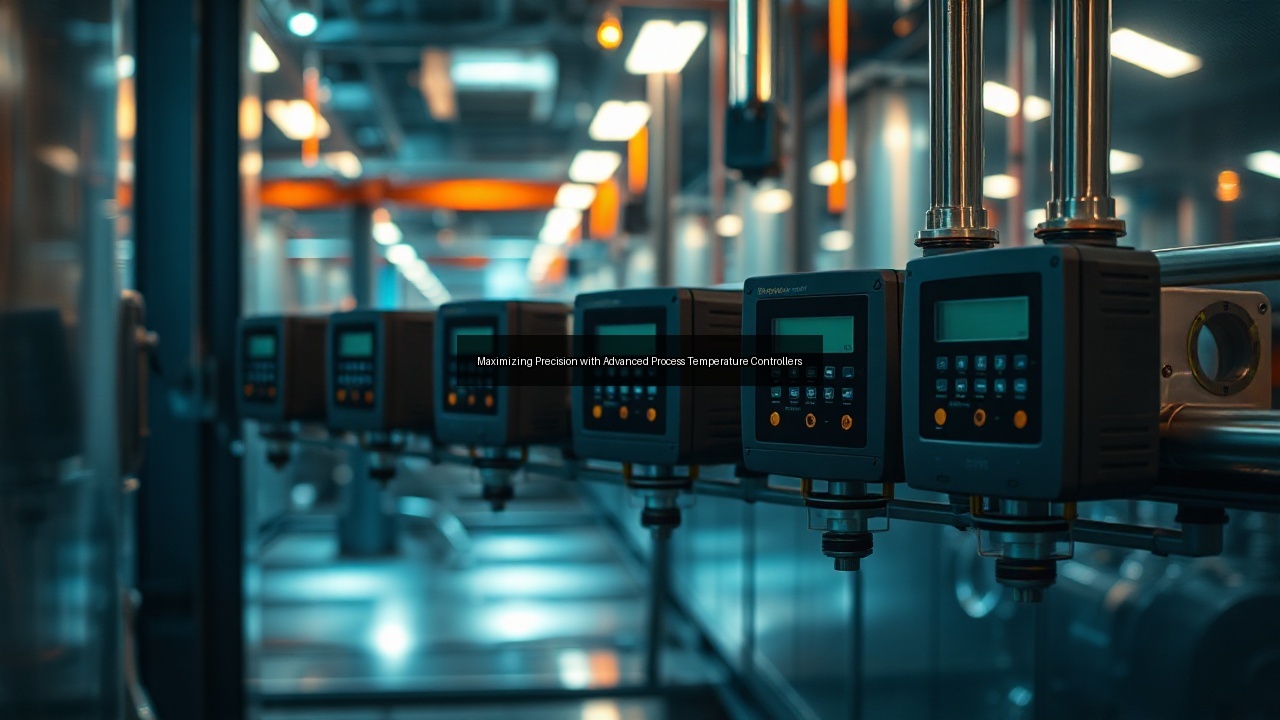
Process temperature controller units regulate heat in manufacturing lines, chemical reactors, and food production systems. Operators rely on these devices to maintain stable conditions that prevent product defects and energy waste. Precise regulation directly influences reaction rates, material properties, and overall throughput. Without reliable temperature control, processes drift and output quality declines. Modern units compare measured temperature against a desired set value and adjust heaters or coolers instantly. This closed-loop action supports consistent results across shifts and reduces downtime from thermal fluctuations. Industrial teams select controllers that handle rapid changes in load while preserving accuracy.
In sectors such as plastics extrusion and semiconductor wafer processing, even minor temperature deviations can alter molecular structures or cause warping. Pharmaceutical batch reactors, for instance, demand tight tolerances to ensure active ingredient stability during synthesis. By integrating predictive algorithms, contemporary controllers anticipate load shifts from incoming raw materials and compensate before deviations occur. This proactive capability not only safeguards product integrity but also optimizes energy consumption, lowering operational costs in high-volume facilities operating around the clock.
Types of Temperature Measurement Devices
Thermocouple sensors deliver fast response in high-temperature environments, while RTDs offer superior stability for lower ranges. Infrared devices measure surface temperature without contact, suiting moving parts or hazardous zones. Each option feeds data into a process temperature controller that interprets signals and issues commands. Selection depends on range, environment, and required response speed. Thermocouples excel in furnaces and ovens, whereas infrared units monitor conveyor belts safely. Accurate measurement forms the foundation for effective pid control and prevents drift that calibration alone cannot fix later.
Thermocouples, typically Type K or J, withstand temperatures exceeding 1200 °C with response times under one second, making them indispensable in metal heat-treating lines. RTDs, often platinum-based Pt100 elements, provide repeatability within ±0.1 °C across -200 °C to 850 °C ranges ideal for food pasteurization. Infrared pyrometers avoid contamination risks in cleanrooms yet require emissivity compensation for reflective surfaces. Engineers evaluate signal conditioning needs, ensuring the controller’s input circuitry matches sensor output impedance to minimize noise pickup in electrically noisy plants.
Introduction to PID Control in Temperature Regulation
PID control combines proportional, integral, and derivative actions to eliminate offset and overshoot in temperature loops. A process temperature controller tunes these parameters so the system reaches set point quickly without oscillation. Proportional gain corrects large errors, integral action removes steady-state deviation, and derivative anticipates changes. Engineers adjust settings through auto-tune functions or manual methods to match heater control equipment characteristics. Proper PID tuning improves precision and extends equipment life by reducing unnecessary cycling. This approach outperforms simple on-off thermostats in demanding applications.
Advanced implementations incorporate gain scheduling that adapts PID constants across different operating zones, such as startup versus steady-state phases. Auto-tune routines apply step-response analysis or relay oscillation methods to calculate optimal values automatically. In extrusion lines where thermal mass varies with screw speed, adaptive PID continuously refines parameters, preventing temperature swings that could degrade polymer viscosity. Compared with on-off control, which induces 5–10 °C hysteresis, well-tuned PID loops routinely achieve ±0.5 °C stability, directly translating into higher yield and reduced scrap.
Key Features of Advanced Process Temperature Controllers
RS-485 and Modbus Communication Protocols
RS-485 enables multi-drop networks that link several process temperature controller units to a central PLC or SCADA system. Modbus protocol standardizes data exchange, allowing remote monitoring of set points, alarms, and process variables. Engineers configure parameters from a PC without climbing ladders or opening panels. This connectivity supports real-time diagnostics and batch logging for compliance records. Robust RS-485 links withstand industrial noise, ensuring reliable temperature measurement transmission over long distances. Integration with existing automation platforms becomes straightforward when controllers speak Modbus natively.
Modern implementations support Modbus TCP over Ethernet for higher bandwidth and easier IT integration. Diagnostic registers expose internal variables such as heater current and sensor health, enabling predictive maintenance alerts before failures occur. In large-scale chemical plants spanning hundreds of meters, differential signaling on RS-485 rejects common-mode interference from variable-frequency drives. Security extensions like Modbus RTU with CRC verification further protect against data tampering in regulated industries requiring audit trails.
DIN Rail vs. Panel-Mount Controllers
DIN rail controllers snap into control cabinets for compact installation alongside relays and power supplies. Panel-mount versions fit directly into enclosure doors for operator visibility and easy access. Both styles accept the same pid algorithms and sensor inputs yet differ in wiring and space requirements. DIN-rail controls save panel real estate in dense I/O racks, while panel-mount controllers provide larger displays for local adjustments. Teams evaluate mounting constraints before choosing between 1/16 DIN and 1/32 DIN formats to optimize layout.
DIN-rail units often feature pluggable terminal blocks that accelerate replacement during maintenance windows. Panel-mount models incorporate IP65-rated bezels suitable for wash-down environments in food processing. When space is limited inside MCC cabinets, 1/32 DIN controllers occupy minimal depth while still supporting dual outputs for heating and cooling. Selection also considers operator ergonomics—larger panel displays reduce reading errors during shift handovers in noisy production halls.
Configurable Inputs and Outputs for Flexibility
Controllers with configurable inputs and outputs accept thermocouples, RTDs, or voltage signals on the same terminal block. Digital outputs drive solid-state relays or contactors, while analog outputs modulate valves or variable-frequency drives. This flexibility lets one process temperature controller manage multiple heater zones or integrate humidity and pressure controls. Users reassign terminals through software menus instead of ordering custom hardware. Such adaptability reduces spare-parts inventory and speeds up changes when process requirements evolve.
Universal input circuitry automatically detects sensor type upon connection, eliminating jumper settings prone to misconfiguration. Linear 4–20 mA outputs can retransmit process values to recorders or serve as cascade set points to downstream controllers. Digital inputs accept remote enable/disable commands from safety interlocks, while event-driven outputs trigger cooling fans only when temperature exceeds thresholds, conserving energy. This modularity supports future expansion without hardware obsolescence.
Precision and Accuracy in Temperature Control
Choosing the Right PID Controller for Your Application
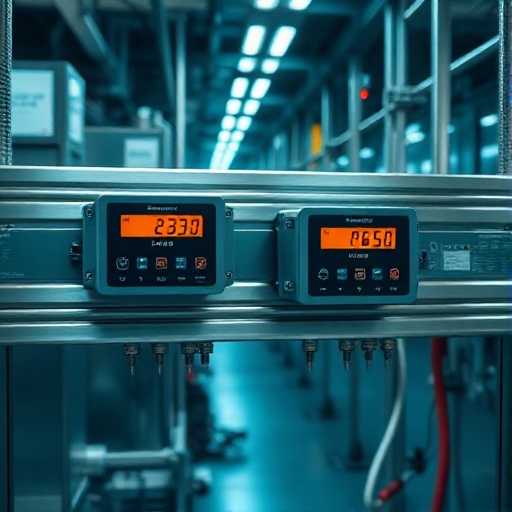
Selecting among PID controller options starts with matching sensor type, output power, and communication needs to the process. High-accuracy models resolve temperature to 0.1 °C and support ramp-soak profiles for heat-treatment cycles. Engineers review heater control equipment ratings to ensure the controller can handle startup surges without nuisance tripping. Features such as auto-tune and adaptive PID algorithms shorten commissioning time. Matching controller capability to application demands delivers the precision required for tight tolerances.
Applications involving rapid thermal cycling, such as injection molding, benefit from controllers offering 50 ms sampling rates and current monitoring to detect heater degradation. Ramp-soak programming allows complex profiles with up to 64 segments, essential for aerospace alloy aging processes. Surge-rated outputs prevent nuisance fuse blows during cold-start inrush currents exceeding 10× steady-state values. Evaluating mean time between failures (MTBF) ratings above 500,000 hours helps justify investment in critical continuous processes.
The Importance of Calibration in Temperature Measurement
Regular calibration verifies that sensor output and controller display agree with traceable standards. Drift from aging thermocouples or amplifier offset introduces error that undermines pid control performance. Technicians apply known reference temperatures and adjust zero and span values inside the process temperature controller. Documented calibration supports quality audits and prevents costly batch rejections. Scheduled checks also reveal failing sensors before they cause process excursions.
Calibration intervals typically range from six months in pharmaceutical environments to two years in less critical HVAC applications. Using dry-block calibrators traceable to NIST ensures uncertainties below 0.05 °C. Electronic span adjustments stored in non-volatile memory survive power cycles and controller replacements. Many facilities implement automated calibration reminders via the controller’s internal clock, generating work orders that maintain compliance with ISO 9001 and FDA 21 CFR Part 11 requirements.
Utilizing Thermocouples for Accurate Readings
Thermocouples generate millivolt signals proportional to temperature difference, allowing quick detection of changes in ovens and extruders. Proper cold-junction compensation inside the process temperature controller maintains accuracy across ambient swings. Extension wire and connector choices affect measurement integrity, so installers follow polarity and shielding guidelines. When paired with high-resolution inputs, thermocouples deliver the fast, reliable data needed for tight pid loops and reduced scrap rates.
Mineral-insulated thermocouples resist vibration in extruder barrels while maintaining response times below 500 ms. Extension cables must match thermocouple type exactly to avoid spurious junctions that introduce offsets. Grounded junctions provide faster response yet risk ground loops; ungrounded versions isolate the measuring junction for electrically noisy environments. High-resolution 24-bit analog-to-digital converters inside modern controllers resolve the small Seebeck voltages to 0.01 °C, enabling precise control even during rapid temperature ramps.
Automation and Integration in Temperature Control
Surface-Mount vs. DIN-Rail Controls: Pros and Cons
Surface-mount control options place the process temperature controller directly on machine frames for short sensor leads and minimal wiring. DIN-rail controls consolidate multiple units inside electrical enclosures for easier maintenance access. Surface-mount styles reduce installation time on new equipment yet expose electronics to vibration and dust. DIN-rail versions protect components and allow hot-swapping without process shutdown. Engineers weigh these trade-offs against environmental conditions and service intervals.
Surface-mount controllers often incorporate conformal coating to withstand humidity and chemical splashes on packaging machinery. DIN-rail assemblies benefit from centralized surge protection and fused power distribution, simplifying troubleshooting. Hot-swap capability requires redundant sensor wiring and bumpless transfer logic to avoid temperature bumps during module replacement. Environmental assessments guide decisions—vibration isolators may be necessary for surface mounting near stamping presses.
Integrating Humidity and Pressure Controls with Temperature Systems
Advanced process temperature controller platforms accept auxiliary inputs for humidity and pressure sensors, creating unified environmental regulation. A single Modbus network transmits all variables to supervisory software that coordinates drying, curing, or sterilization cycles. Coordinated control prevents condensation or over-pressurization that standalone thermostats cannot address. This integration improves product consistency and reduces energy consumption across interconnected process steps.
In pharmaceutical lyophilization, simultaneous control of shelf temperature, chamber pressure, and condenser humidity ensures consistent cake structure. Cascade loops use temperature deviation to trim pressure set points, accelerating cycle times without risking product collapse. Data historians capture correlated variables for root-cause analysis when batch deviations occur. Energy savings arise from demand-based activation of humidification or vacuum pumps rather than continuous operation.
PC-Programmable Controllers: Enhancing Automation in Temperature Management
PC-programmable controllers let engineers upload recipes, tune PID parameters, and log data through Ethernet or USB connections. Graphical interfaces display trends and alarm history, speeding troubleshooting of temperature excursions. Batch records generated automatically satisfy regulatory requirements without manual transcription. Remote access enables off-site experts to adjust set points during production changes. These capabilities transform basic temperature control into a data-driven automation asset.
Recipe management stores hundreds of parameter sets for different products, downloadable via drag-and-drop interfaces. Trend viewers overlay multiple zones to identify interactions invisible on local displays. Automated PDF report generation includes electronic signatures compliant with 21 CFR Part 11. Cloud connectivity options allow OEMs to monitor fleets of machines globally, delivering firmware updates and performance benchmarking without site visits.
Best Practices for Selecting and Using Temperature Controllers
Evaluating Process Temperature Controller Options
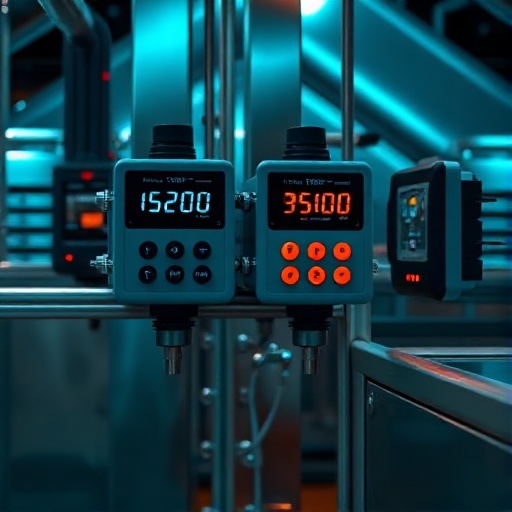
Buyers compare input resolution, output ratings, and protocol support when reviewing process temperature controller options. Models with universal inputs reduce inventory while delivering the accuracy demanded by modern processes. Field-replaceable output modules extend service life and lower long-term costs. Reviewing user manuals for auto-tune quality and noise immunity helps avoid commissioning delays. Thorough evaluation ensures the chosen unit matches both current and future process needs.
Requesting demonstration units for side-by-side testing on actual process equipment reveals real-world performance differences. Total cost of ownership calculations include spare module pricing, training hours, and software licensing fees. Vendor support responsiveness and local stock availability often outweigh minor specification advantages when uptime is critical. Future-proofing favors platforms supporting firmware field upgrades and expanding protocol libraries.
Tips for Effective Temperature Control in Various Mounting Styles
Proper ventilation around panel-mount controllers prevents heat buildup that skews internal temperature measurement. DIN-rail units require adequate spacing for airflow and cable routing. Shielded sensor cables and correct grounding minimize electrical interference that disturbs pid loops. Operators document set points and alarm limits for each mounting style so replacements restore performance quickly. Attention to installation details preserves the precision built into the controller hardware.
Thermal modeling of enclosure heat loads ensures internal ambient stays below 50 °C for rated accuracy. Ferrite cores on sensor leads suppress high-frequency noise from nearby VFDs. Color-coded wiring standards and laminated connection diagrams accelerate troubleshooting by maintenance teams. Documenting baseline performance metrics after commissioning provides reference points for detecting gradual degradation over months of operation.
Maintenance and Troubleshooting of PID Controllers
Routine inspection of terminals, sensor connections, and cooling fans keeps pid controllers operating reliably. When temperature deviates, technicians first verify sensor calibration and heater continuity before altering PID settings. Event logs stored in the process temperature controller reveal patterns that point to failing components or load changes. Scheduled firmware updates add features and security patches. Consistent maintenance practices sustain accuracy and extend equipment life across all mounting styles.
Quarterly terminal torque checks prevent intermittent connections caused by thermal cycling. Heater resistance trending identifies open elements before complete failure. Alarm logs timestamped with process variables help correlate excursions with production events such as material lot changes. Cybersecurity patches address vulnerabilities in networked controllers, maintaining compliance with evolving industrial security standards.