The Future of Custom Process Hoppers in Sustainable Manufacturing
Innovations in Custom Process Hoppers for Sustainable Manufacturing
The Role of Custom Process Hoppers in Reducing Waste
Custom process hoppers play a pivotal role in sustainable manufacturing by significantly reducing waste. These specialized containers are designed to handle bulk materials efficiently, ensuring that minimal product is lost during the manufacturing process. By optimizing the flow of materials, custom hoppers facilitate a streamlined operation that decreases the chances of contamination and spillage. This results in more effective recycling of scrap and recyclables, enhancing eco-friendliness in the production cycle. Additionally, precise designs minimize the need for excess packaging and handling, directly contributing to less waste generation. Many companies now prioritize the integration of custom hoppers into their systems to align with their sustainability goals, thus paving the way for greener manufacturing practices.
Materials Used in Custom Hoppers: A Focus on Sustainability
Choosing the right materials for custom process hoppers is crucial in promoting sustainability. Manufacturers increasingly opt for stainless steel and sheet metal, materials known for their durability and recyclability. Stainless steel hoppers resist corrosion and can endure harsh manufacturing environments, making them a long-lasting investment. Sheet metal offers versatility in design and can be easily fabricated into various shapes and sizes to meet specific needs. By utilizing these materials, companies not only enhance the lifespan of their hoppers but also ensure they remain eco-friendly. The focus on sustainable materials extends beyond just the hoppers themselves; it incorporates the entire supply chain, from sourcing to recycling, contributing to a circular economy.
Design Considerations for Custom Process Hoppers
Dimensions and Configurations for Optimal Efficiency
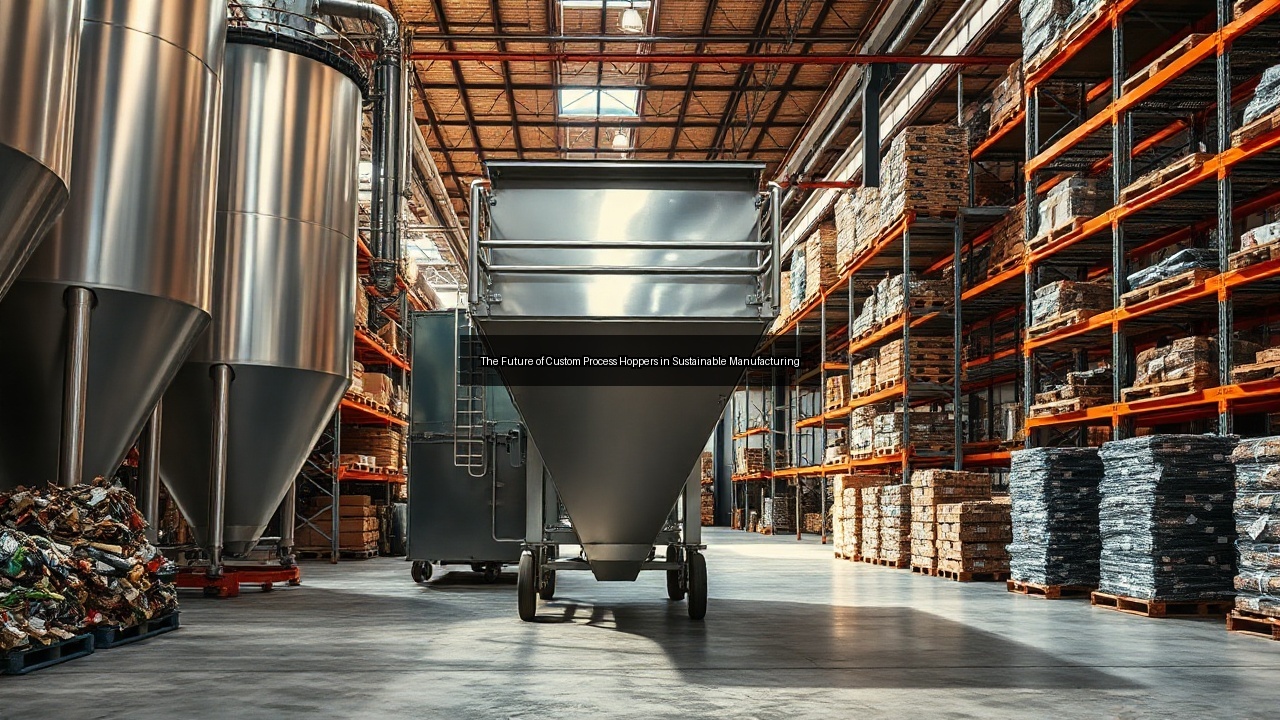
Designing custom process hoppers involves careful consideration of dimensions and configurations to achieve optimal efficiency. The specific requirements of each manufacturing process dictate the size and shape of the hopper. For instance, a cone-shaped hopper may be ideal for bulk materials like concrete or aggregates, allowing for smooth flow and easy discharge. Custom hoppers can be tailored to fit seamlessly within existing layouts, including integration with conveyor systems and pallet racks. Properly dimensioned hoppers reduce the risk of blockages and facilitate quick loading and unloading of materials, enhancing overall productivity. Companies can leverage advanced design software to create hoppers that maximize space while ensuring easy access and maintenance.
Integration with Conveyor Systems and Warehousing Solutions
The integration of custom process hoppers with conveyor systems and warehousing solutions is essential for enhancing workflow and productivity. These hoppers often serve as a critical link in the material handling process, feeding bulk materials directly into conveyor belts for transport to various manufacturing stages. Effective integration can minimize downtime and streamline operations, as materials move seamlessly from hoppers to storage or processing areas. Custom hoppers can be designed to fit specific conveyor setups, ensuring compatibility and optimizing space. Additionally, combining hoppers with warehousing solutions allows for effective bulk storage and easy retrieval of materials, aligning with modern demands for efficiency in manufacturing environments.
Safety Features: Guardrails and Gates for Enhanced Productivity
Incorporating safety features such as guardrails and gates into custom process hoppers enhances both safety and productivity. Guardrails prevent accidental falls or spills, creating a safer working environment around hoppers. This is especially important in facilities handling heavy materials or working with elevated hoppers. Gates provide controlled access for operators, allowing them to manage material flow effectively. These safety features not only protect employees but also reduce the risk of costly accidents and downtime. By prioritizing safety in the design of custom process hoppers, companies can foster a culture of safety and efficiency, ultimately boosting overall productivity.
Applications of Custom Process Hoppers in Various Industries
Utilizing Custom Hoppers for Recyclables and Scrap Management
Custom process hoppers find extensive applications in managing recyclables and scrap across various industries. These hoppers are designed to handle a range of materials, from metals to plastics, providing an efficient solution for waste management. In recycling facilities, custom hoppers facilitate the sorting and processing of recyclables, ensuring that materials are collected and processed efficiently. By utilizing these hoppers, companies can streamline their recycling processes, reduce waste, and comply with environmental regulations. Effective scrap management contributes to the overall sustainability efforts of manufacturing companies, allowing them to reclaim valuable materials and reduce their environmental footprint.
The Importance of Stainless Steel and Sheet Metal in Manufacturing
Stainless steel and sheet metal are vital in the manufacturing of custom process hoppers, offering numerous advantages. Stainless steel provides excellent resistance to corrosion, making it ideal for industries that deal with harsh chemicals or moisture. Its durability ensures that hoppers maintain their structural integrity over time, even under heavy loads. Sheet metal, on the other hand, is highly versatile and can be easily shaped into various configurations to meet specific needs. Both materials contribute to the longevity of hoppers, reducing replacement costs and minimizing waste. By focusing on these materials, companies enhance their sustainability efforts, ensuring that their manufacturing processes remain efficient and environmentally responsible.
Future Trends in Custom Process Hoppers and Manufacturing Productivity
Emerging Technologies in Hopper Fabrication
Emerging technologies are reshaping the fabrication of custom process hoppers, driving innovation and productivity. Advanced manufacturing techniques such as 3D printing and laser cutting allow for greater precision and customization, enabling manufacturers to create hoppers tailored to specific applications. These technologies reduce material waste during production and allow for rapid prototyping, significantly shortening lead times. Moreover, automation in the fabrication process enhances efficiency, enabling companies to scale their operations while maintaining high-quality standards. As these technologies continue to evolve, they will play a crucial role in defining the future of custom process hoppers in sustainable manufacturing.
The Impact of Casters and Mobility on Operational Efficiency
Casters and mobility features in custom process hoppers significantly enhance operational efficiency. By equipping hoppers with casters, manufacturers enable easy movement throughout the production area, allowing for flexible setups and quick adjustments to workflows. This mobility reduces the time and effort spent transporting materials, making it easier to adapt to changing production demands. Mobile hoppers can also facilitate better organization in warehousing solutions, as they can be relocated to optimize space and accessibility. As companies increasingly prioritize efficiency and adaptability, integrating mobility features into custom process hoppers will become a standard practice, further enhancing productivity in manufacturing environments.
See Also
- Maximizing Productivity with Tailor-Made Hoppers for Conveyor Systems
- Innovative Designs for Custom Process Hoppers in the Concrete Industry
- Customization Options for Process Hoppers: A Comprehensive Guide
- Enhancing Safety with Custom Guardrails for Process Hopper Installations
- Unlocking Efficiency with Custom Process Hoppers for Bulk Material Handling