Revolutionizing Aerospace Manufacturing with Swiss Machining Techniques

The Evolution of Swiss Machining in Aerospace Manufacturing
Historical Overview of Machining Techniques
Swiss machining traces its roots to the 19th century watchmaking industry in Switzerland, where craftsmen needed extreme accuracy for tiny components. Early lathes delivered consistent results on small parts, setting the stage for later aerospace demands. Machine shops adopted these methods to handle intricate designs that traditional approaches could not manage efficiently. Over decades, the process expanded beyond timepieces into medical and industrial fields before aerospace manufacturers recognized its value for high-stakes applications.
Engineers refined the core principles of guide bushing support and simultaneous tool operation, which reduced deflection and improved surface finishes. This evolution allowed shops to produce reliable parts under tight tolerances, directly influencing modern swiss precision machining. Aerospace teams later scaled these techniques to meet growing production volumes without sacrificing quality.
The Advent of CNC Swiss Machining
CNC swiss machining transformed the original mechanical process by integrating computer controls that automate complex sequences. Operators program swiss lathe movements to execute multiple operations in one setup, slashing cycle times for aerospace fasteners and fittings. This shift from manual adjustments to digital precision opened doors for repeatable results across large batches.
Shops now combine cnc machining with swiss style lathes to handle exotic materials while maintaining micron-level accuracy. The technology supports higher productivity because machines run unattended for extended periods. Aerospace suppliers rely on these advances to deliver components faster and with fewer errors than earlier manual methods allowed.
Key Innovations in Swiss Machining Technology
Recent advancements in tooling and spindle design have boosted the capabilities of swiss machining equipment. Live tooling attachments permit milling, drilling, and threading without secondary operations, streamlining workflows in machine shops. These upgrades handle intricate geometries that define many aerospace parts.
Improved coolant delivery systems and vibration dampening further enhance performance when cutting nickel alloys. Manufacturers track real-time data from sensors to optimize feeds and speeds, pushing the limits of what swiss turning can achieve. Such innovations keep aerospace programs on schedule while reducing scrap rates.
Precision and Efficiency: The Hallmarks of Swiss Machining
Understanding Swiss Style Lathes and Their Benefits
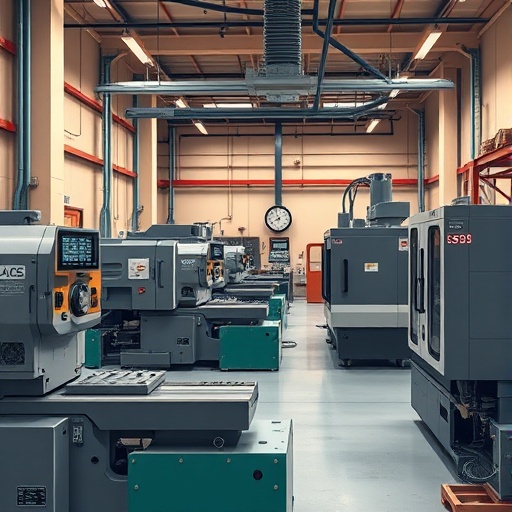
Swiss style lathes feature a guide bushing positioned close to the cutting tool, which stabilizes long, slender workpieces during rotation. This design minimizes chatter and delivers superior finishes on parts destined for aircraft engines. Shops appreciate how the configuration supports tight concentricity even at high spindle speeds.
Benefits extend to reduced setup times because multiple tools operate concurrently. Aerospace teams achieve consistent diameters and lengths across production runs, improving overall part interchangeability. The lathe architecture also excels at machining parts with length-to-diameter ratios that challenge conventional equipment.
Comparison of Swiss Machining vs. Traditional Methods
Traditional lathes often require multiple setups and fixtures, introducing cumulative errors that swiss machining avoids through single-setup processing. Swiss methods cut cycle times dramatically when producing high volumes of precision components for landing gear and control systems. Traditional approaches still suit simple, large-diameter work but fall short on intricate features.
Material removal rates remain competitive while surface quality improves under the swiss process. Aerospace manufacturers report lower tooling wear and fewer secondary finishing steps. The contrast becomes clear in tolerance capabilities, where swiss machining routinely holds specifications that traditional machines struggle to match consistently.
The Role of Automation in Enhancing Productivity
Automation integrates bar feeders, robotic part handling, and in-process inspection directly into swiss machining cells. These additions allow continuous operation across shifts, raising daily output without added labor costs. Aerospace suppliers meet demanding delivery schedules by running lights-out production on critical orders.
Software-driven tool monitoring prevents crashes and extends tool life, further lifting productivity metrics. Shops measure gains through reduced downtime and higher first-pass yield rates. Automation also supports traceability requirements common in aerospace contracts by logging every machining parameter automatically.
Applications of Swiss Machining in Aerospace Components
Machining Complex Geometries for Aerospace Parts
Swiss machining excels at creating parts with undercuts, cross-holes, and fine threads that appear throughout hydraulic actuators and sensor housings. The process maintains accuracy across multiple diameters on a single workpiece, eliminating the need for transfer between machines. Aerospace designers leverage this freedom to consolidate assemblies into fewer, lighter components.
Shops routinely machine features such as helical flutes and micro-grooves that improve fluid dynamics in fuel systems. The ability to hold positional tolerances within microns ensures reliable performance under extreme flight conditions. Complex geometries no longer equate to extended lead times thanks to optimized swiss machining process strategies.
Utilization of Nickel Alloys in Aerospace Applications
Nickel alloys resist corrosion and heat, making them ideal for turbine blades, exhaust components, and structural brackets. Swiss machining handles these tough materials through rigid setups and specialized carbide tooling that maintains edge integrity. Proper chip control prevents work hardening that can ruin surface finishes.
Operators select appropriate speeds and feeds to balance tool life against production volumes. Aerospace programs benefit from the process's ability to achieve required mechanical properties without inducing residual stresses. Nickel parts emerge ready for heat treatment and coating with minimal additional processing.
The Importance of Precision in Aerospace Machining
Precision dictates flight safety and system reliability, so aerospace machining demands tolerances measured in microns. Swiss machining delivers this consistency by supporting the workpiece near the cut zone, reducing deflection on thin-walled sections. Every machined feature must align perfectly to prevent vibration or leakage in assembled systems.
Quality teams verify dimensions with coordinate measuring machines and optical comparators after each run. The process supports statistical process control that flags deviations before they affect an entire batch. Aerospace certification programs accept swiss precision machining results because the method inherently produces traceable, repeatable outcomes.
Tools and Machines: The Backbone of Swiss Machining
Overview of Swiss Machining Equipment
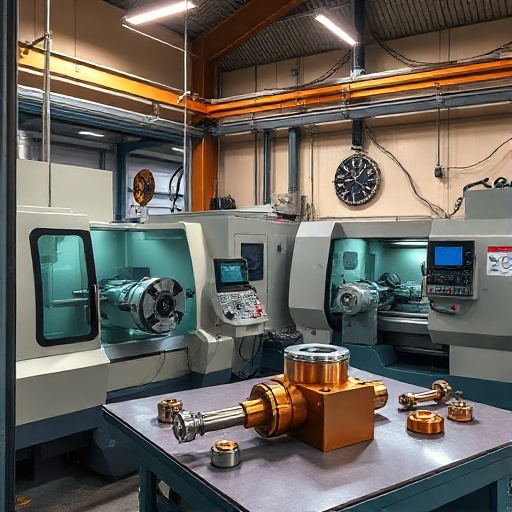
Modern swiss machining equipment ranges from compact 5-axis models to larger platforms capable of 32-millimeter bar stock. These machines incorporate high-pressure coolant systems and thermal compensation to maintain accuracy during long runs. Aerospace machine shops select configurations based on part size and material requirements.
Integrated tool changers and sub-spindles expand capability without increasing floor space. Manufacturers calibrate equipment regularly to sustain the tight tolerances aerospace contracts specify. Equipment versatility allows quick changeovers between different component families while preserving process stability.
CNC Machines vs. Screw Machines: A Comparative Study
CNC machines offer programmable flexibility that older screw machines lack, enabling rapid adaptation to new aerospace part designs. Screw machines still produce simple, high-volume fasteners efficiently but require extensive cam setup time. Swiss CNC platforms combine the speed of screw machines with the precision of digital controls.
Operators program tool paths once and store them for future runs, reducing lead times compared with mechanical screw machines. Aerospace suppliers favor CNC versions when geometries include angled holes or variable contours. The comparison highlights how CNC swiss machining solutions deliver both volume capability and design freedom.
Essential Tooling for Effective Machining
Tooling selection directly affects cycle time and part quality in swiss machining. Carbide inserts with specialized coatings withstand the heat generated when cutting nickel and titanium alloys. Shops maintain sharp edges through disciplined replacement schedules that prevent dimensional drift.
Custom form tools create unique profiles in single passes, boosting productivity on complex aerospace geometries. Proper tool geometry and chip breakers minimize burrs that would otherwise require manual deburring. Effective tooling strategies also reduce vibration, protecting both the machine and the finished component.
Future Trends in Swiss Machining for Aerospace
Integration of Advanced Software in Machining Processes
Advanced software packages simulate tool paths and optimize cutting parameters before any metal is removed. Simulation reduces trial runs and prevents collisions on expensive aerospace parts. Operators import CAD models directly into swiss machining software to generate efficient programs quickly.
Real-time adaptive control adjusts feeds based on actual cutting forces, protecting tooling during variable material conditions. Shops use these tools to analyze historical data and refine processes for higher yields. Software integration shortens development cycles while improving consistency across production volumes.
The Impact of Industry 4.0 on Aerospace Manufacturing
Industry 4.0 connects swiss machines to factory networks that track utilization, tool wear, and quality metrics continuously. Aerospace manufacturers gain visibility into every stage of the machining process, enabling predictive maintenance that avoids unplanned downtime. Data-driven decisions optimize overall equipment effectiveness.
Digital twins of swiss lathe operations allow virtual testing of new part programs. Connectivity supports remote monitoring and collaborative troubleshooting across global supply chains. The result is faster response to design changes and tighter integration between engineering and production teams.
Emerging Materials and Their Influence on Machining Techniques
New composite-metal hybrids and advanced superalloys challenge existing swiss machining parameters. Shops develop specialized tooling and coolant strategies to machine these materials without delamination or cracking. Aerospace programs push for lighter, stronger components that require updated process knowledge.
Research into cryogenic cooling and ultrasonic-assisted machining shows promise for extending tool life on difficult alloys. Manufacturers test emerging materials on swiss style lathes to validate feasibility before scaling to production. Continuous adaptation keeps swiss machining relevant as aerospace material science advances.